This is the page where users will find your site’s blog
Wines of the Cotes du Rhone
On the way down
If you are driving down from Calais you will likely drive past Riems and Epernay, the Champagne region. Passing Troyes towards Dijon you could take in Chablis by taking a western rather than eastern route to Dijon. Both Dijon and Beaune (a little further south) are great places to break up the drive and the main commercial towns of the Burgundy wine trade. Even if you are not stopping over, stepping off the A6 between Dijon and Chalon-sur-Saone on the D974 will take you through the historic vineyards of Gevrey-Chambertin, Vosne-Romanee, Pommard, Meursault and the Montrachets to name but a few. The Burgundy Wine site is a very useful source of information. If you do want to do any tasting book beforehand not to be disappointed. Unless there is a particular grower you want to sample it is often good to go to a chateau that has a good set up for tasting and perhaps can offer lunch. The Beaune tourism site has a good booking system. We had a nice lunch and tour at Chateau Montrachet. Finally you can finish off Burgundy by heading towards Macon and visiting Pouilly, Fuisse, St Veran and the historic Roche de Solutre site.
Between Macon and Lyon lies Beaujolais. Once famed for the Beaujolais Nouveau races the marketing team dreamt up to get the English to drink quantities of their rather low quality wine, Beaujolais has since focussed more on quality than gimmick and now produces some very good wines.
Lyon is itself the gastronomic heart of France (and thus, the French would say, the world) but other than having many great restaurants and caves a vins to enjoy wine, doesn’t feature much in this blog.
The Northern Rhône
Starting at Vienne, just south of Lyon, is one of the world’s great vineyard areas. Cote Rotie, literally the Roasted Hillside, can be seen from the A7 motorway, the terraced vineyards rising impossibly steeply above the Rhône and the town of Ampuis. These are big, bold wines, Syrah with 20% Viognier. The most notable are by Guigal, Rene Rostaing and Stephane Ogier. None are cheap and most need 10 or more years aging to flourish. Rene Rostaing offers the more affordable and still wonderful examples.
Below Cote Rotie lies Condrieu and Chateau Grillet. Both 100% Viogner white wines. The latter used to be part of Condrieu but unusually now has an AOC all unto itself. Not that well known in the UK but can be terrific.
A little further south at a kink in the Rhône, the solitary hill of Hermitage towers above the town of Tain l’Hermitage. Best known for its Syrah reds, it also makes some sublime whites from Roussane and Marsanne grapes. M Chapoutier, Paul Jaboulet Aîné, J L Chave, Marc Sorrel and Delas Frères are some of the best known names, providing a range of wines for most budgets. There are number of caves in the town and opportunities for wine tasting.
Furthest south is Cornas which used to be considered a more rustic gem but has got more refined and consistent in the last couple of decades. It is full bodied and rich, 100% Syrah, Auguste Clape and Alain Voge the most renowned but many good vineyards.
Of the rest, Crozes Hermitage wines can trade of the name of their southern neighbour but some are very good, Saint Joseph and St Peray are generally a bit more mixed in quality although there are still some great wines to be found for very reasonable prices.
The Southern Rhône
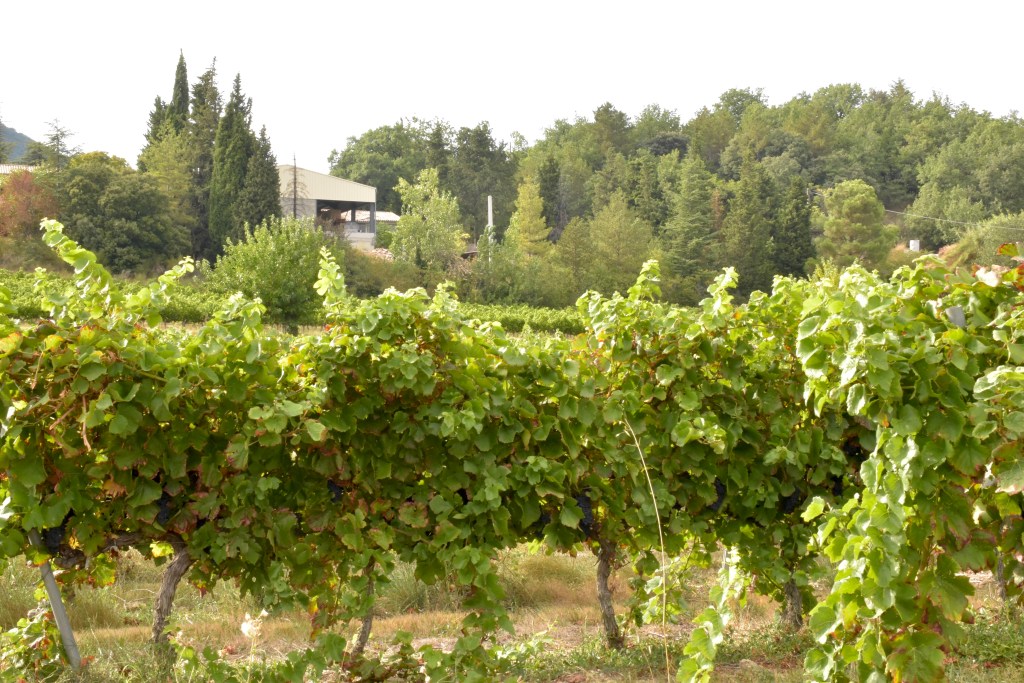
There is then a gap around Montelimar. That’s not to say there are no vines here but they fall more generically into the Cotes du Rhône category. While almost all the wines of the Northern Rhône hug the river banks, the Southern Rhône is spread diffusely from Orange and Avignon towards the Dentelles de Montmirail mountain range to the east. Here the ground is noticeably more arid and less lush, and the climate hotter and more intense.
The most well known of the Southern Rhône is Chateauneuf du Pape (CNDP), named after the eponymous town where one of the popes built a castle in the 14th Century when the Papacy moved from Rome to nearby Avignon for a spell. CNDP can contain up to 13 grape varieties (and Chateau Beaucastel famously contains all 13) with Syrah, Grenache and Mouvedre dominant. One look at the large rocks below the vines gives you an idea of the baking heat that goes into the grapes to drive the sugars and alcohol and resulting full bodied wines. The famous names are Beaucastel, Clos des Papes, Janasse, Rayas, Vieux-Telegrpahe and La Nerthe but there are many good producers and often the less well known are very good value (Chateau La Gardine is good). There are also some good whites, again blends, creamy with complex floral and fruit flavours.
Gigondas and Vacqueyras are villages to the north east of CNDP, nestling in the foothills of the Dentelles de Montmirail and in the shadow of Mont Ventoux. Both produce very high quality blends of Grenache, Syrah and Mouvedre, they are know for their garrigue the classic smells of herbes de Provence, and I find them peppery and spicy making them distinct from the more classic roundedness of the CNDP. They used to be considered more coarse than CNDP but now with more care and consistency they often produce first class wines.
Other notable wines of the region include Cairanne, a slightly lighter version of Gigondas and Vacqueyras with similar spicy tones which was only granted its own AOC in 2016. Rasteau is next door to Cairanne. It only got its AOC for red wines in 2010, its wines are similar to that of Gigondas but a little less heavy. Both Cairanne and Rasteau produce wines that are both indifferent and very good so its worth doing some research. The only other red wine appellation is Lirac which is a bit lighter and more fruity than most Cotes du Rhône wines. Most other wines come under the broad Cotes du Rhône AOC and can be very nice but, it can be a bit hit and miss.
There are a few wines that fall outside of the bold Syrah/Grenache red and Roussanne/Marsanne white styles:
- Beaumes de Venise is a sweet wine made from the Muscat grape. It is very pleasant, herbaceous and can be of very high quality. The region is just to the south east of Gigondas.
- Tavel, to the west of Avignon and near Lirac, solely makes rose. It is a heavier, sweeter rose than the drier ones you get further south in Provence but well regarded and worth trying.
- Clairette de Die is made about one hours drive directly east of Sauzet in Die (pronounced Dee). It is a crémant style sparkling white wine and is a favourite aperitif of ours in Sauzet. It works well with a little drop of liqueur or cassis in the bottom of the glass too.
There are many other small vineyards, some very local to Sazuet and all fun to explore. Montelimar has some good ‘cave a vins’ wine shops who will advise you on good local wines and less well known but equally good wines from the regions given above. Trips to any of the areas above will also reward you with wonderful food and hospitality. The southern Rhône area is probably more scenic as the northern Rhône follows the river and hence the industry and the A7 Autoroute du Soleil. You can also combine Chateauneuf du Pape and perhaps even Gigondas, Vacqueyras and Beaumes de Venise with a trip to Orange or Avignon.
Cycling around Sauzet
There are innumerable delights to enjoy around Sauzet and the Drome Provencal area. Mostly simply involve slipping into the local way of life and enjoying the fine food and wine, walking and swimming in the near by hills or taking in the two millenia of history left behind in the buildings and monuments all around.
One particularly fine way to do this is by bike. Cycling can be done at any age and of any state of fitness but this blog is aimed to inform the more enthusiastic road cyclist.
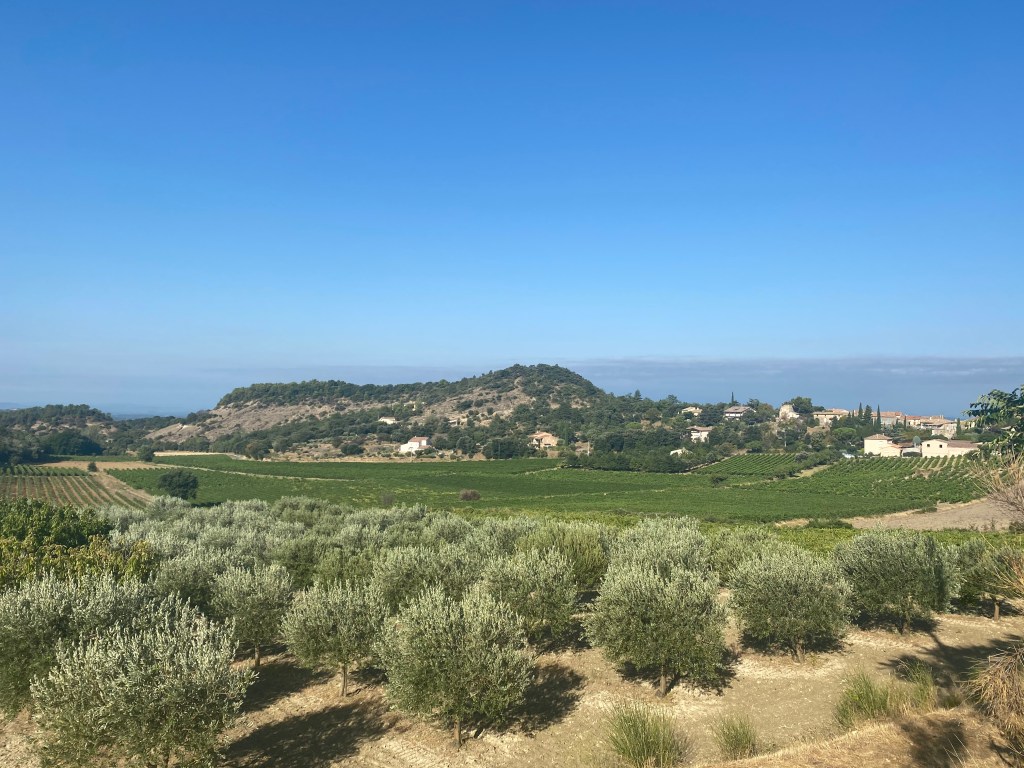
Sauzet sits in a glacial depression with the beginning of the Vercours and Alps to the north east, the Ardeche gorge to the west and the notorious Mont Ventoux to the south.
If you are not familiar with cycling in France, the first thing that is apparent is the quality of the roads and apparent reduced rolling resistance compared the UK which simply makes cycling easier and more enjoyable.
From Sauzet there are many pleasant excursions of less than 100km round trip:
- Heading through the Forest of Marsanne climbing 400m to a 500m summit over 8km from just outside Sauzet and passing through the pretty and vibrant village of Marsanne
- Heading south on the flat plain to Le Colombier and climbing to 430m
- Heading east a little further brings you to Bordeaux and the 1,000m Col de la Chaudiere – high but mostly at less than 7% gradient – going through the artistic village of Saou, nestled in the mountains
- Heading west you cross the Rhone and head up to Privas via an 800m summit
Its not all about the climbs but the above gives you an idea of the range of choices surrounding this pretty plain and the above rides are all through interesting and scenic routes giving you a feel for the agriculture and life in this part of the world. There are many villages along the way to stop for a pastry and a coffee or something stronger.
Climbs or not there are also many destinations that make for a good ride such as the vibrant Dieulefit famed for its pottery, Grignan with its grand chateau (and many good restaurants), Crest with its imposing medieval castle and the aforementioned Saou which also has great restaurants.
If you like your wine (as I do!) Sauzet sits in between the Northern and Southern Rhone regions, both within easy reach by bike. I’ve written another blog about the wine of the region but cycling the route is a particularly fun way to get to know it. Starting just south of Lyon in Vienne and hugging the Rhone, you can take in the Cote Rotie, home to the wine critic Robert Parker’s favourite red wines, 30 miles south to Hermitage with some France’s finest reds and whites before heading on to Sauzet a further 40miles down the Rhone, passing through the vineyards of Condrieu, Saint Joseph and Cornas along the way.
South of Sauzet the wines of the Southern Rhone follow a less linear pattern and are more varied but no less revered. Heading south via Grignan you come first to Cairanne and then Rasteau venturing further south in the shadow the the Dentelles de Montmirail mountain range (the foothills of Mont Ventoux) to Gigondas and Vacqueyras all within a few miles of each other. These wines used to be considered ‘village’ wines but many now compete with the giants of the Chateauneuf du Pape. Passing Beaumes-de-Vennise which makes an interesting sweet wine you arrive in the aforementioned Chateauneuf du Pape famous for its big heavy reds blended from up to 13 (yes 13) different grapes but also making some fantastic whites. You can either finish off this tour at Orange or Avignon both steeped in history. Orange has one of Europe’s best preserved Roman amphitheatres and many pleasant restaurants and hotels. Avignon was the seat of the Papacy and Christianity during the 14th Century and the Papal Palace is one of the largest and most important Gothic buildings in Europe with a great tour.
Finally if you are feeling brave or stupid enough, Mont Ventoux is about 50 miles and1.5hrs drive to the south of Sauzet. 2,000m up over 20km it is visible for many miles around and a route from Montelimar near Sauzet to Mont Ventoux is often a stage of the Tour de France. It is on my bucket list but remains, for me, as yet unconquered.
Some routes below on Strava, there are also a few on bikemap and komoot
Loriol sur Drome via Foret de Marsanne
 Chemin de Ronde